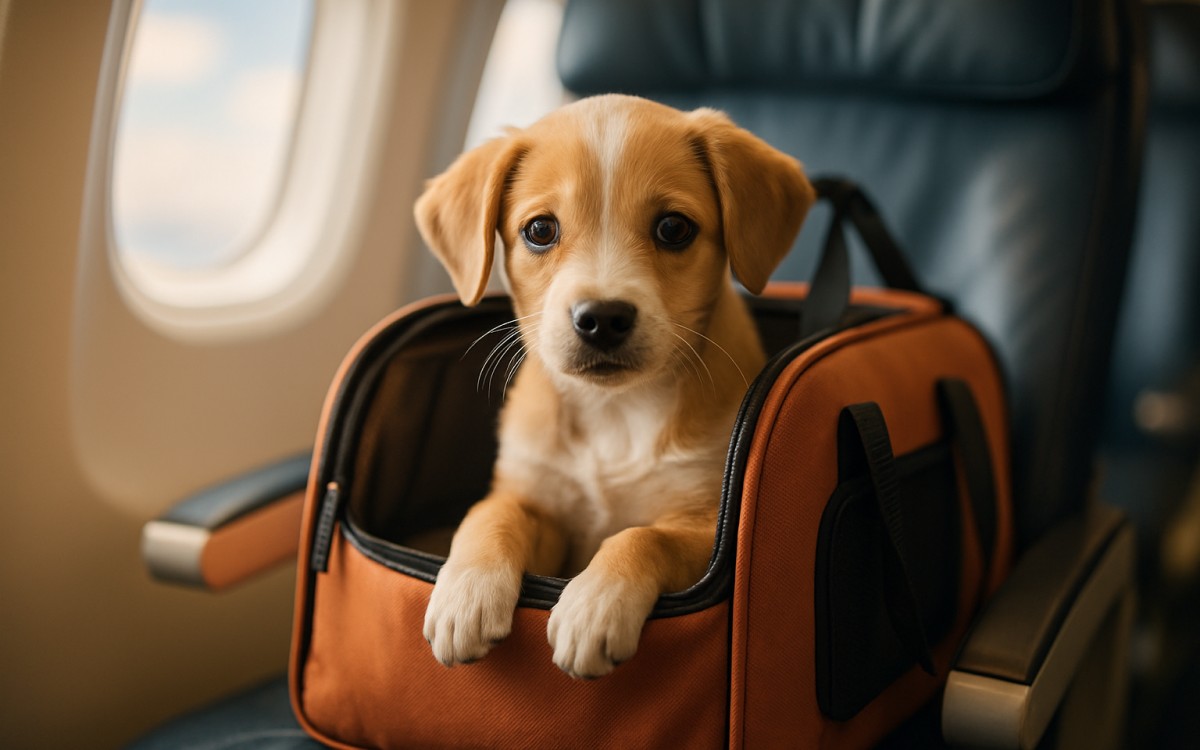
Travelling with a pet is one of those experiences that sits somewhere between heartwarming and genuinely stressful. The preparation involved, the paperwork, the carrier dimensions, the anxious look on a dog’s face at the check-in counter — it is a lot to navigate. But once the rules are understood and the groundwork is laid, flying domestically with a pet becomes far more manageable than it might first appear. Knowing what to expect at each stage of the journey is half the battle.
Before the Booking Is Even Made
Not All Airlines Allow Pets
This is the first thing worth knowing. Not every airline operating on domestic routes accepts pets, and among those that do, the policies vary considerably. Some carriers allow small pets in the cabin, others only permit them as checked baggage or cargo, and a few do not accommodate them at all. Checking the specific pet policy of the airline before booking is essential, because assumptions made based on one carrier’s rules will not necessarily apply to another.
Notifying the Airline in Advance
Most airlines that do accept pets require advance notice at the time of booking or shortly after. Pet travel is not something that can typically be added as an afterthought at the airport. Slots for in-cabin pets are often limited per flight, and the cargo hold has its own capacity considerations. Getting in touch with the airline early, confirming the booking, and understanding exactly what documentation and preparation will be required saves a lot of last-minute scrambling.
Documentation and Health Requirements
Veterinary Health Certificate
A health certificate issued by a registered veterinarian is a standard requirement across most domestic airlines that accept pets. This document confirms that the animal is fit to fly, free from illness, and up to date on vaccinations. The certificate is usually required to have been issued within a specific window before the travel date, so timing the vet visit matters correctly. It is worth calling the airline directly to confirm exactly how recent the certificate needs to be, as this can vary.
Vaccination Records
Alongside the health certificate, proof of vaccination is typically required. For dogs, a valid anti-rabies vaccination certificate is almost universally asked for. Other vaccinations may also need to be documented depending on the carrier’s requirements. Keeping a dedicated folder with all pet-related documents, both physical and digital copies, makes the check-in process considerably smoother and removes any risk of being turned away at the counter.
Carrier and Size Rules
In-Cabin Travel
Pets travelling in the cabin are subject to strict size and weight limits. The combined weight of the pet and its carrier is usually capped at a figure that varies by airline, but it is typically on the lower end. The carrier itself must fit under the seat in front and must be well-ventilated, leak-proof, and secure. The pet must remain inside the carrier for the entire duration of the flight. Soft-sided carriers are often preferred for cabin travel as they offer a degree of flexibility that makes fitting under the seat easier.
Checked Baggage and Cargo
Larger pets that exceed the in-cabin weight limit are transported in the aircraft hold, either as excess baggage or as cargo, depending on the airline’s classification. This process involves more preparation. The crate used must meet specific standards, typically those set by the International Air Transport Association, with enough room for the animal to stand, turn around, and lie down comfortably. Proper ventilation, secure latches, and clear labelling with the owner’s contact details are all standard requirements.
Breed Restrictions
Certain breeds face additional restrictions or are not accepted at all on some domestic routes. Snub-nosed breeds, also known as brachycephalic breeds, such as Pugs, Bulldogs, and Persian cats, are often restricted due to the respiratory challenges they face in pressurised environments. It is important to check whether a specific breed is on any restricted list before making plans, as this is not always prominently displayed in the general pet policy.
At the Airport
Check-In and Security
Travelling with a pet adds time to the check-in process, so arriving earlier than usual is a sensible approach. At the check-in counter, all documentation will be reviewed, the carrier will be inspected, and the pet’s weight will be confirmed. At security, the pet will typically need to be removed from the carrier so the carrier can pass through the scanner separately. Keeping the pet calm during this moment, particularly in a busy terminal, is easier said than done, but a familiar toy or blanket inside the carrier can help.
Fees to Expect
Pet travel is rarely free. Most airlines charge a fee for transporting a pet, whether in cabin or in the hold. These fees differ between carriers and are sometimes calculated based on the weight of the pet and carrier combined. Confirming the exact charge at the time of booking, rather than at the airport, avoids any surprises on the day.
Keeping the Pet Comfortable
Before the Flight
Feeding a pet a large meal just before a flight is generally not recommended, as the combination of stress and movement can cause discomfort. A light meal a few hours before departure is a more sensible approach. Hydration matters too, and a water-compatible carrier with an attachable bowl makes it easier to offer water during any waiting time before boarding.
During the Flight
For pets in the cabin, staying calm and reassuring throughout the flight goes a long way. Speaking softly, keeping fingers near the carrier mesh, and avoiding drawing too much attention to the pet in a crowded cabin all help. For pets in the hold, the preparation done beforehand, a comfortable crate, familiar scents, and a secure environment, is what carries them through the journey. The flight itself is usually shorter than the anxiety leading up to it, for the owner at least.
After Landing
The journey does not quite end at the gate. For pets that have travelled in the hold, collection happens at the oversized or special baggage area rather than the standard carousel. Heading there promptly after landing means the pet is not left waiting any longer than necessary. Once collected, giving the animal time to settle, offering water, and finding a quiet spot away from the terminal crowd before moving on make the transition out of the airport far less overwhelming. A short walk outside, where permitted, can do wonders for a pet that has been confined for the duration of the flight.
A Few Things Worth Double-Checking
No two airlines handle pet travel in exactly the same way, and policies do get updated from time to time. Before every trip, it is worth revisiting the carrier’s current pet policy rather than relying on what was noted from a previous booking. A quick call to the airline’s customer service line can also clarify anything that is not immediately clear on the website. Travelling with a pet takes more planning than travelling alone, but with the right preparation in place, it is an entirely workable experience for both the owner and the animal.